One Pan to Rule Them All: Why the Wok Is the Upgrade Your Weeknight Kitchen Has Been Waiting For
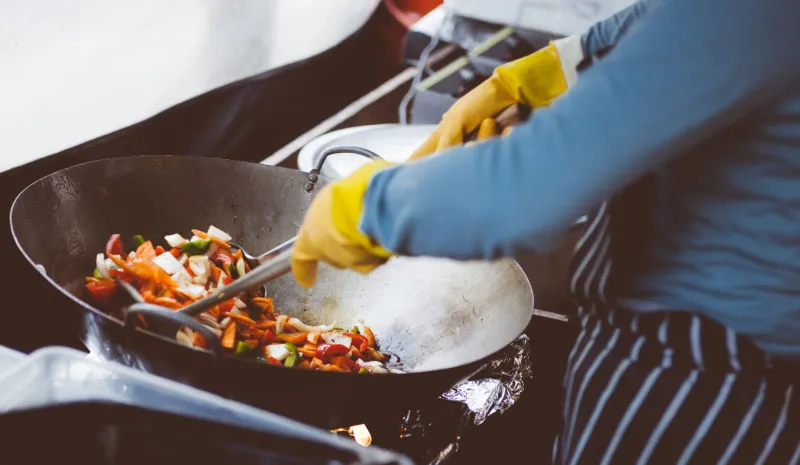
The Skillet Has Had a Good Run. Now Step Aside.
For most American home cooks, the 12-inch stainless or cast iron skillet is the default workhorse. It lives on the stove, handles everything from seared chicken thighs to scrambled eggs, and gets a lot of credit for a lot of meals. No shade to the skillet. But if you've ever watched a Hong Kong cook fire up a wok at a dai pai dong—those open-air street food stalls that are as much performance as restaurant—you start to understand what you've been missing.
The wok isn't just a different shape. It's a fundamentally different philosophy about how heat, food, and speed interact. And once you get it, going back to a flat pan feels like texting with one thumb.
What's Actually Happening Inside a Wok
Let's talk physics for a second, because it matters here.
A traditional wok—round-bottomed, carbon steel, thin walls—heats up faster and gets hotter than almost any Western pan. The curved shape creates distinct temperature zones: the bottom of the bowl reaches scorching temps while the sloping sides stay slightly cooler. This isn't a design flaw. It's the whole point.
When you toss vegetables up the side of the wok, you're moving them from intense heat to a gentler zone in a fraction of a second. That constant motion, combined with the extreme temperatures, is what creates wok hei—a term Hong Kong cooks use to describe that elusive smoky, slightly charred, deeply savory quality that makes restaurant stir-fry taste nothing like the home version. It literally translates to "breath of the wok," and it's produced by a rapid Maillard reaction at temperatures most Western cookware can't safely reach.
Your skillet, by contrast, has a flat surface that pools moisture. Vegetables steam instead of sear. Proteins release liquid before they brown. You end up with food that's cooked but not alive—technically done, but missing that spark.
The Speed Factor Nobody Talks About Enough
Hong Kong kitchens are famous for efficiency. In a city where real estate is some of the most expensive on the planet and restaurant kitchens are the size of a generous American closet, every tool has to earn its place. The wok earns it every single night.
A proper stir-fry in a well-seasoned wok takes three to five minutes, start to finish. Not because Hong Kong cooks are rushing—but because the tool is designed to do the job fast. High heat means less time per ingredient. Less time means less moisture loss, brighter colors, better texture. You're not just saving time; you're actually cooking better food.
For American weeknight cooking, this is huge. The gap between "I don't have time to cook" and "dinner is ready" is often just ten minutes. A wok closes that gap in a real, practical way.
Choosing Your First Wok: Don't Overthink It
Walk into any Asian grocery store—and most American cities have at least one—and you'll find woks ranging from $15 to $150. Here's the honest truth: you don't need to spend much.
Carbon steel is the move. It's what Hong Kong home cooks and professional kitchens have used for generations. It's lightweight, conducts heat beautifully, and builds a natural non-stick patina over time through seasoning. Avoid non-stick coated woks—they can't handle the high heat you need, and that coating will eventually flake.
Flat-bottomed works better for American stoves. Traditional round-bottomed woks are designed for gas wok burners that cradle the pan from below. Unless you have a serious BTU setup, a flat-bottomed carbon steel wok will give you better contact with your burner—gas or electric.
Size matters, but not how you think. A 14-inch wok is the sweet spot for most American home cooks. Big enough to toss food without losing it over the side, small enough to heat up quickly and store without drama.
Brands like Joyce Chen, Yosukata, and the humble store-brand versions at your local Asian market are all solid starting points.
Seasoning: The Step That Changes Everything
A new carbon steel wok arrives with a factory coating that needs to come off before you cook anything. This is non-negotiable. Here's the process:
- Scrub it. Use hot water and a stiff brush to remove the protective coating. This is the one time you'll use soap on it.
- Dry it completely. Put it on a burner over low heat until every drop of moisture is gone.
- Heat it hard. Crank the burner to high and let the wok heat until you see the metal start to change color—bluish, then grayish. This is normal. This is good.
- Add oil. Swirl in a thin layer of high smoke-point oil (peanut, vegetable, or avocado oil work well). Use a paper towel held with tongs to coat the entire inner surface.
- Repeat. Let it smoke off, wipe, add more oil. Do this three or four times.
After seasoning, your wok will look darker and slightly uneven in color. That's the patina forming. Every cook from here on builds it further. After a few weeks of regular use, you'll have a naturally non-stick surface that's genuinely better than anything you can buy off the shelf.
Three Dishes to Start With
Garlic Bok Choy is the easiest entry point. High heat, a tablespoon of oil, smashed garlic, baby bok choy halved lengthwise. Thirty seconds of tossing, a splash of soy sauce, done. It'll be the best vegetable side you've made in months.
Egg Fried Rice is the wok's signature flex. Day-old rice, two eggs, scallions, soy sauce, a little sesame oil. The wok gets the rice crispy in spots without drying it out—something no skillet can replicate because the moisture just sits and steams.
Beef with Ginger and Scallion is a Hong Kong classic that shows off the wok's speed. Thinly sliced flank steak, marinated in soy sauce and a pinch of baking soda for fifteen minutes, then tossed in a screaming hot wok with fresh ginger and scallion for literally two minutes. The baking soda tenderizes the meat; the heat does the rest.
The Bigger Picture
There's something worth noting about why the wok is having a moment in American kitchens right now. People are cooking more at home, thinking harder about what they eat, and looking for tools that actually make the process better—not just more complicated.
The wok fits that perfectly. It's affordable, versatile, and rooted in a cooking tradition—Hong Kong's—that has always prioritized fresh ingredients, fast preparation, and maximum flavor with minimum fuss. Those values translate directly to what health-conscious American cooks are after today.
You don't need a culinary degree or a restaurant kitchen to use one well. You just need a burner, some oil, and about fifteen minutes to learn something that'll genuinely change how you cook.
The skillet will still be there if you need it. But once the wok earns its spot on your stove, you'll wonder what took you so long.