MSG Isn't the Villain. Hong Kong Cooks Have Known That for Decades.
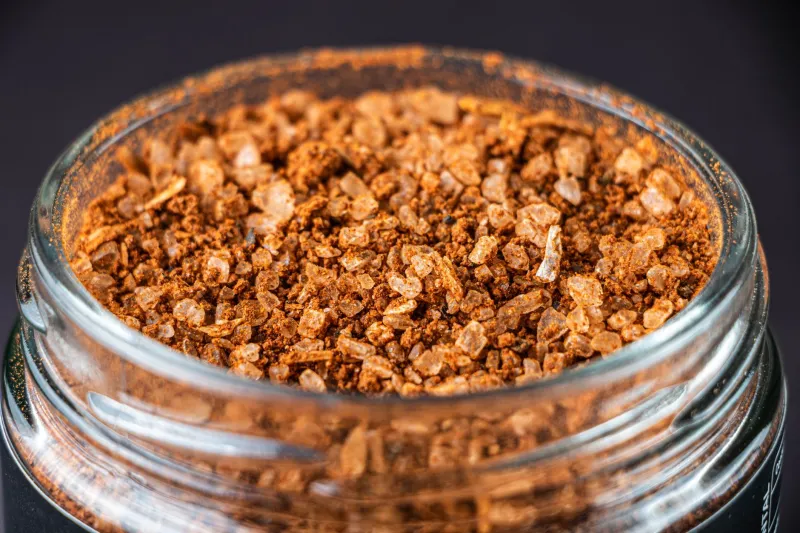
There's a small glass jar that lives on the counter of almost every Hong Kong household kitchen. It's not exotic. It's not expensive. It doesn't have an influencer deal or a Whole Foods shelf placement. It's monosodium glutamate — MSG — and while American food culture spent the better part of forty years treating it like a public health crisis, Hong Kong cooks were using it with the same casual confidence they'd apply to a pinch of salt.
So what do they know that we don't?
A Flavor Molecule With a PR Problem
MSG is the sodium salt of glutamic acid, an amino acid that occurs naturally in foods you probably already love: tomatoes, parmesan cheese, soy sauce, mushrooms, anchovies, and miso. When your brain registers that deep, savory satisfaction from a long-simmered bolognese or a bowl of ramen — that's glutamate doing its job. It activates the fifth taste, umami, which translates loosely from Japanese as "pleasant savory taste."
The ingredient itself was isolated in 1908 by Japanese chemist Kikunae Ikeda, who was trying to understand why kombu seaweed broth tasted so singularly satisfying. He identified glutamate as the culprit and commercialized it as a flavor enhancer. Within decades, it had spread across East and Southeast Asian cooking traditions — including Hong Kong's famously layered, wok-fired cuisine.
The problem in America started in 1968, when a physician wrote a letter to the New England Journal of Medicine describing symptoms — headache, flushing, palpitations — he associated with eating Chinese food. The term "Chinese Restaurant Syndrome" was born, MSG became the scapegoat, and the stigma calcified into cultural fact. Except it was never actually proven.
What the Science Actually Says
Decades of controlled, double-blind studies have failed to consistently link MSG consumption to adverse health effects in the general population. The FDA classifies it as "generally recognized as safe." Major reviews by researchers at institutions including the University of Washington have found that the symptoms associated with "Chinese Restaurant Syndrome" don't hold up under rigorous testing — even among people who self-identify as MSG-sensitive.
For context: the average American already consumes around half a gram of glutamate daily just through naturally occurring sources. A typical serving of parmesan contains more glutamate than a bowl of fried rice seasoned with MSG. Yet nobody's avoiding parmesan.
The fear was never really about the molecule. It was about where the molecule came from — and that's a conversation worth having honestly.
How Hong Kong Cooks Actually Use It
Here's the thing that often gets lost in the MSG debate: skilled cooks don't use it as a crutch. They use it as a calibration tool.
In a Hong Kong kitchen, MSG is typically deployed in small amounts — we're talking fractions of a teaspoon — to lift and round out flavors that are already doing most of the work. A congee that's been simmering for an hour gets a tiny pinch near the end. A stir-fry with fresh ginger, garlic, and seasonal vegetables might get a whisper of it alongside oyster sauce. It doesn't replace technique or fresh ingredients; it amplifies them.
The broader philosophy is one of umami layering. Rather than relying on a single source of savory depth, Hong Kong cooking tends to stack complementary umami contributors: dried shrimp alongside fresh ones, fermented black beans with fresh garlic, a splash of soy sauce in a broth that's already rich with pork bones. MSG, when it appears, fits into that framework — it's one voice in a chorus, not a solo act.
Building Your Own Umami Toolkit
You don't have to start with MSG if you're not ready. The more important lesson from Hong Kong's approach is the underlying strategy: think in layers, not shortcuts.
Dried ingredients punch above their weight. Dried shiitake mushrooms, dried scallops, and even dried anchovies (look for them at Asian grocery stores) release concentrated glutamate when rehydrated or simmered. Add them to stocks, braises, or grain dishes and you get a depth that fresh ingredients alone can't replicate.
Fermented condiments are your friends. Miso, fish sauce, oyster sauce, doenjang, and fermented black bean paste all contain high levels of naturally occurring glutamate. A tablespoon of any of these stirred into a sauce or soup base can transform it from flat to fully dimensional.
Tomato paste is underrated. This one surprises people. Concentrated tomatoes are among the highest natural sources of glutamate in any Western pantry. A spoonful of tomato paste sautéed in olive oil before adding other ingredients adds an umami backbone that most people can't identify but everyone notices.
Aged cheeses and cured meats. Parmesan rinds simmered in soup. A few slices of prosciutto rendered in a pan before building a sauce. These are European applications of the same principle Hong Kong cooks have been practicing for generations.
And if you do want to try MSG directly? Start with a quarter teaspoon in a dish that serves four. Use it the way you'd use salt — to finish and balance, not to dominate.
The Cleaner Flavor Paradox
One of the counterintuitive benefits of understanding umami is that it can actually help you cook cleaner. When your dish has genuine depth — from layered ingredients, proper technique, and a calibrated hit of savory richness — you don't need to compensate with excess sodium, sugar, or fat to make it satisfying.
That's a principle deeply embedded in Hong Kong's food culture, where fresh produce from wet markets, simply prepared proteins, and strategic seasoning have always been the foundation. The goal isn't to mask ingredients. It's to let them be fully themselves.
American home cooks are increasingly interested in eating with intention — fewer processed ingredients, more whole foods, meals that actually taste like something. Umami literacy fits that project perfectly. It's not about adding chemicals to your food. It's about understanding the chemistry that's already there.
Reclaiming the Pantry Staple
The MSG jar on the Hong Kong kitchen counter isn't a symbol of corner-cutting. It's a symbol of culinary confidence — knowing your ingredients, understanding how flavor works, and refusing to let unfounded anxiety dictate what goes into your food.
American kitchens are ready for that same confidence. The science is clear, the technique is learnable, and the results speak for themselves. Start with a bag of dried shiitakes and a bottle of good fish sauce if you want to wade in slowly. Or just pick up a small container of MSG at your nearest Asian grocery and see what happens when you stop being afraid of a molecule your body already makes on its own.
Either way, the flavor is waiting.