Your Morning Meal Is Underselling You: The Case for Hong Kong-Style Breakfasts
Let's be honest about the average American breakfast. A bowl of sugary cereal. A grabbed granola bar. Maybe a sad desk yogurt. Even the "healthy" options — flavored oatmeal packets, fruit smoothies loaded with natural sugars — tend to spike your blood sugar and leave you hunting for snacks before lunch even rolls around.
Now consider what a typical morning looks like in Hong Kong: a warm bowl of silky congee topped with century egg and pork, a plate of cheung fun (rice noodle rolls) drizzled with soy sauce and sesame, or a bamboo steamer of har gow alongside a cup of strong milk tea. These aren't heavy, sluggish meals. They're carefully balanced, protein-forward, and built for sustained energy — the kind that carries you through a packed morning without the 10 a.m. crash.
At Fresca HK, we're big believers that the best nutritional wisdom doesn't always come from a supplement label or a wellness trend. Sometimes it comes from a decades-old cha chaan teng (Hong Kong-style diner) doing things right since before most of us were born.
What Makes Hong Kong Breakfasts Nutritionally Different
The core difference comes down to macronutrient balance and ingredient quality. Traditional Hong Kong morning dishes are built around a foundation of complex carbohydrates, lean proteins, and minimally processed ingredients — a combination that dietitians consistently point to as the gold standard for satiety and steady energy.
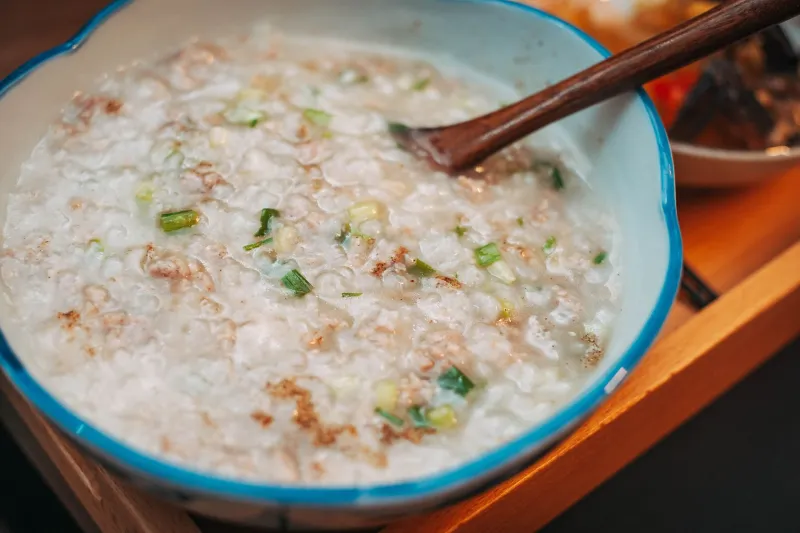
Take congee (also called jook). At its base, it's rice slow-cooked in broth until it breaks down into a creamy, porridge-like consistency. On its own, it's gentle and easy to digest — great for mornings when your gut isn't fully awake yet. But the toppings are where the nutrition really stacks up. Sliced ginger adds anti-inflammatory compounds. A soft-poached egg or shredded chicken brings clean protein. Scallions and white pepper layer in micronutrients and flavor. The result is a meal that's filling without being heavy, and nourishing without being fussy.
Rice noodle rolls (cheung fun) offer another angle. Made from a thin, steamed rice flour sheet wrapped around shrimp, beef, or barbecued pork, they're gluten-free, low in fat, and deliver a meaningful protein hit with each bite. Pair them with a drizzle of light soy sauce and a splash of sesame oil, and you've got a breakfast that's genuinely satisfying — without a single gram of added sugar.
And then there's the broader world of dim sum sides that Hong Kong families reach for in the morning: steamed shrimp dumplings, turnip cake (lo bak go) pan-fried until golden, sticky rice wrapped in lotus leaf. These aren't indulgent weekend treats in their original context — they're everyday fuel, portioned thoughtfully and built from whole ingredients.
The Protein Problem with Standard American Breakfasts
Research consistently shows that higher-protein breakfasts reduce overall calorie intake throughout the day and improve concentration and mood in the morning hours. Yet most grab-and-go American breakfast options are carbohydrate-dominant and protein-poor. A plain bagel with cream cheese? Roughly 10 grams of protein, mostly from refined carbs. A packet of instant oatmeal with dried fruit? Similar story.
Hong Kong-style breakfasts flip that ratio. A bowl of congee with a century egg and some pork floss clocks in around 18–22 grams of protein, depending on toppings, with a glycemic load that's far gentler than a bowl of cornflakes. A plate of cheung fun with shrimp delivers comparable protein with the added benefit of omega-3 fatty acids.
For busy professionals who need their mornings to actually work for them, this kind of nutritional architecture isn't a luxury — it's a strategy.
How to Source the Ingredients Without a Trip to Hong Kong
The good news: you don't need to live near a dim sum palace to pull this off. Most mid-to-large American cities have Asian grocery stores — 99 Ranch Market, H Mart, and Mitsuwa locations are spread across major metros — where you can find everything you need.
For congee, jasmine or short-grain rice works well. Pick up some chicken or pork bone broth (or make your own), and stock your pantry with white pepper, sesame oil, and light soy sauce. Toppings like preserved eggs, pork floss, and dried scallops are shelf-stable and easy to find in the international aisle.
For cheung fun, look for fresh rice noodle sheets in the refrigerated section of Asian grocery stores, or dried rice noodle rolls you can rehydrate at home. Many stores also carry pre-made cheung fun that just needs a quick steam.
For dim sum-style sides, frozen har gow (shrimp dumplings) and siu mai (pork and shrimp dumplings) from brands like Wei-Chuan or Synear are widely available and steam up in under 15 minutes. Turnip cake can be made from scratch on a Sunday and pan-fried throughout the week — a genuine meal-prep win.
A Simple Weekday Congee to Get You Started
If you're new to Hong Kong-style breakfasts, congee is the most forgiving entry point. Here's a stripped-down version that works even on a Tuesday morning.
Quick Weekday Congee (serves 2)
- 1 cup cooked jasmine rice (leftover rice works perfectly)
- 3 cups low-sodium chicken broth
- 1 teaspoon fresh ginger, grated
- 1 cup shredded rotisserie chicken
- 2 soft-boiled eggs, halved
- Toppings: sliced scallions, a drizzle of sesame oil, white pepper, light soy sauce
Combine the rice and broth in a saucepan over medium heat. Stir frequently as the rice begins to break down, about 10–15 minutes, until you reach a creamy consistency. Stir in the ginger and chicken. Ladle into bowls, add your toppings, and serve immediately.
That's it. Twenty minutes, whole ingredients, no processed sugar, and a breakfast that actually holds you until lunch.
The Bigger Picture
American food culture is genuinely starting to embrace the idea that breakfast doesn't have to mean sweet, processed, or rushed. The rise of savory breakfast bowls, grain-based morning meals, and protein-forward starts is real — and Hong Kong's culinary tradition has been quietly ahead of that curve for generations.
At Fresca HK, we think the best path to eating fresher and feeling better doesn't require reinventing the wheel. Sometimes it just means borrowing one from a culture that's already figured it out. Your mornings are worth more than a granola bar. Start them accordingly.