30-Minute Depth: The Hong Kong Kitchen Secrets That Blow Slow Cooking Out of the Water
There's a particular kind of cooking mythology that runs deep in American food culture. It goes something like this: real flavor takes time. Real stock simmers for six hours. Real braises go low and slow all Sunday. Real depth of flavor is something you earn through patience, not shortcuts.
Hong Kong kitchens respectfully disagree.
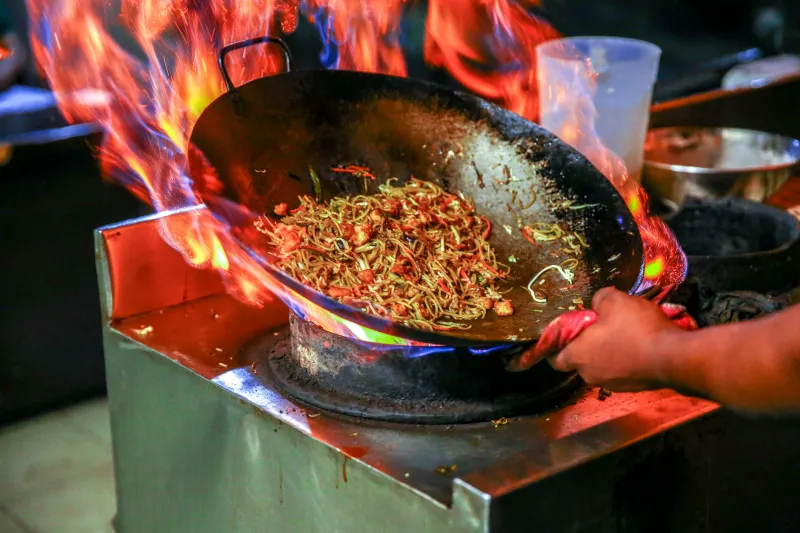
Walk into a dai pai dong—one of those legendary open-air food stalls that have fed Hong Kong for generations—and you'll watch a cook produce a wok full of impossibly complex, layered flavor in under ten minutes. No stock pot. No overnight soak. No weekend project. Just a razor-sharp understanding of which ingredients do the heavy lifting, and exactly when to deploy them.
That's the philosophy behind what we'd call the Hong Kong umami shortcut. And once you understand how it works, you'll never look at your slow cooker the same way again.
Why Western Cooking Leans on Time (And What It's Actually Compensating For)
Before we get into technique, it's worth understanding why slow cooking became such a dominant model in Western kitchens in the first place. Long simmers extract flavor from bones, connective tissue, and vegetables that don't have a ton of intrinsic intensity on their own. A chicken carcass isn't particularly delicious raw—but give it four hours in water with some aromatics, and you've got something worth cooking with.
In other words, slow cooking is a workaround. It's a method for coaxing flavor out of ingredients that need coaxing.
Hong Kong cooking starts from a different premise entirely: use ingredients that are already packed with concentrated flavor, and your job is mostly about timing and layering, not extraction.
This is a fundamental shift in cooking philosophy, and it changes everything.
The Pantry Does the Work
The engine of Hong Kong's fast-flavor approach is a category of ingredients that food scientists call umami bombs—and Hong Kong cooks have been using them long before the word "umami" entered the American food vocabulary.
A few key players:
Shrimp paste (hom ha): This fermented, intensely savory paste is made from tiny shrimp that have been salted and left to develop over months. A teaspoon—just one teaspoon—dropped into a stir-fry introduces a level of savory depth that no amount of simmering could replicate. It smells aggressive out of the jar, but in the pan, it mellows into something almost indescribable: oceanic, meaty, deeply satisfying.
Dried scallops (conpoy): These are the secret weapon of Hong Kong home cooks who want restaurant-level richness in a weeknight dish. Soak them briefly, shred them, and add them to rice porridge, scrambled eggs, or stir-fried vegetables. They carry a concentrated sweetness and brininess that acts like a flavor multiplier for everything around them.
Fermented black bean paste: Made from soybeans that have been salted and fermented, this paste adds a complex, slightly funky depth to sauces that can't be replicated with fresh ingredients alone. It's the difference between a stir-fry that tastes good and one that tastes like it came from a kitchen that's been cooking for decades.
Oyster sauce: Yes, most American home cooks have a bottle somewhere in the back of their pantry. But Hong Kong cooks use it differently—not as a finishing drizzle, but as a foundational layer, added early and allowed to caramelize slightly in the wok.
The Layering Technique That Changes Everything
Knowing which ingredients to use is only half the equation. The other half is understanding when to add them—and in what order.
Hong Kong wok cooking operates on a layering logic that's almost musical. Each ingredient enters at a specific moment, contributing its character to the developing flavor profile before the next element arrives.
Here's how it typically plays out:
-
High heat, oil, aromatics first. Garlic, ginger, and sometimes dried chili go into a screaming-hot wok almost simultaneously. The goal isn't to soften them—it's to bloom their volatile compounds in the oil, creating a flavor-infused base in under sixty seconds.
-
Fermented or paste-based ingredients next. This is where shrimp paste, black bean paste, or fermented tofu might enter. They need brief contact with the hot surface to lose their raw edge and integrate into the oil.
-
Protein or vegetables, timed precisely. The wok's high heat creates the Maillard reaction—that browning process responsible for so much savory complexity—far faster than a slow braise ever could. Thirty seconds of proper wok contact on shrimp or thinly sliced beef produces more surface flavor than an hour of low simmering.
-
Sauce components and finishing flavors last. Oyster sauce, a splash of Shaoxing wine, maybe a few drops of sesame oil. These go in at the end to preserve their character, not cook it away.
The whole process, start to finish, might take eight minutes.
Strategic Timing: The Move American Cooks Almost Always Skip
One of the most underrated techniques in Hong Kong cooking is something that sounds almost counterintuitive to Western-trained cooks: pulling back from the heat at the right moment.
Western slow cooking is all about sustained, continuous application of low heat. Hong Kong wok cooking is about intense, brief heat—and then knowing exactly when to stop.
Overcooking in a wok doesn't just make food mushy. It actively destroys the flavor compounds you just spent eight minutes building. The volatile aromatics that make garlic and ginger sing? Gone after two minutes of continuous high heat. The fresh brightness that makes a stir-fry feel alive? Cooked out if you linger too long.
This is why timing, in Hong Kong cooking, is treated almost like an ingredient itself. It's not enough to know what goes in the wok. You have to know exactly when to get it out.
Bringing This Home: A Practical Starter Move
If you're new to this approach, here's the simplest possible entry point: replace your next recipe's stock-based sauce with a combination of oyster sauce, a small amount of fermented black bean paste, and a splash of water.
Don't simmer it for forty-five minutes. Just let it heat through for ninety seconds, toss with your protein and vegetables, and serve.
The flavor you'll get will be richer, more complex, and more interesting than most from-scratch Western sauces that took an hour to reduce. Not because you cheated—but because you used better tools.
That's the whole point of the Hong Kong approach. It's not a shortcut in the sense of cutting corners. It's a shortcut in the sense of taking a smarter route to the same destination.
Time, in the kitchen, is just one resource. Ingredient intelligence is another. And in Hong Kong, they've always known which one does more work.