Forget the Supplement Aisle: Hong Kong's Herbal Tea Tradition Is a Smarter Approach to Daily Wellness
An Honest Confession About the Supplement Aisle
I have spent more money than I'd like to admit in the supplement aisle. Vitamin D in the winter. Magnesium before bed. Adaptogens in capsule form that cost more per serving than a decent lunch. There's always a new category, a new deficiency to address, a new study that a brand's marketing team has decided is relevant to whatever they're selling.
I'm not here to dismiss any of it wholesale. Some supplements are genuinely useful. But I've also been thinking a lot lately about what my family members in Hong Kong do instead—and the contrast is striking enough to be worth talking about.
They drink tea. Not in a casual, pass-the-time way, but in a deliberate, this-is-how-we-take-care-of-ourselves way. Specific herbs for specific seasons. Specific brews for specific complaints. A whole philosophy of preventative wellness that doesn't require a subscription or a loyalty points card.
What Hong Kong's Herbal Tea Culture Actually Looks Like
Hong Kong has a long and specific relationship with herbal tea, rooted in Traditional Chinese Medicine (TCM) principles that predate Western pharmacology by centuries. Scattered throughout the city's neighborhoods—particularly in older districts like Sheung Wan and Sham Shui Po—you'll still find liang cha shops (literally "cooling tea" shops) serving bitter herbal brews from large clay pots. These aren't novelty items for tourists. They're neighborhood institutions where locals stop in for a cup the way someone in Boston might stop for coffee.
The underlying philosophy is different from how most Americans think about health. Rather than treating symptoms after they appear, TCM's approach to herbal teas is largely about maintaining balance—keeping the body's internal environment in a state that makes illness less likely to take hold. The concept of heat and cooling in the body is central to this: certain foods and environmental conditions create internal imbalance, and specific herbs help restore equilibrium.
You don't have to be a TCM practitioner—or even a believer in its theoretical framework—to get practical value from these traditions. Many of the herbs involved have been studied for their bioactive compounds, and the ritual of brewing and drinking something intentionally warm and plant-based has its own documented benefits for stress and digestion.
Three Herbal Tea Traditions Worth Borrowing
Chrysanthemum and Wolfberry (Goji) Tea
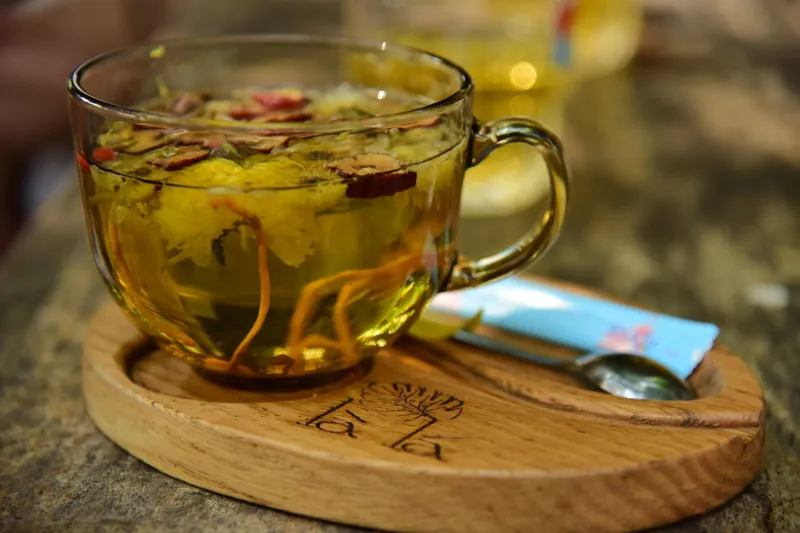
This combination is one of the most common in Hong Kong households and tea shops. Chrysanthemum flowers (ju hua) have a delicate, floral flavor with a subtle sweetness, and they're traditionally associated with supporting eye health and cooling what TCM describes as liver heat—symptoms that often manifest as eye strain, headaches, or irritability.
Wolfberries (goji berries) add a mild tartness and a well-documented antioxidant profile that's attracted significant Western research attention. Together, they make a tea that's genuinely pleasant to drink and easy to prepare.
How to make it: Steep a small handful of dried chrysanthemum flowers and a tablespoon of dried goji berries in just-boiled water for five minutes. Add a small piece of rock sugar if you like a touch of sweetness. Drink warm or allow to cool and serve over ice in summer.
Where to source the ingredients: Dried chrysanthemum flowers and goji berries are available at most Asian grocery stores, many health food stores, and easily ordered online. Look for chrysanthemum flowers that are pale yellow to white—the smaller bai ju hua variety is particularly prized.
Ginger and Jujube (Red Date) Tea
If chrysanthemum tea is the cooling option, ginger and jujube tea is the warming counterpart—traditionally consumed when the body feels depleted, during cold weather, or after illness. Ginger's benefits for digestion and circulation are well-established in both Eastern and Western research. Jujube dates add natural sweetness along with vitamins C and B-complex, and are associated in TCM with calming the nervous system and supporting sleep.
This is the tea your Hong Kong grandmother would have made you when you came home exhausted. It's warming, slightly sweet, and deeply comforting in a way that feels nourishing rather than indulgent.
How to make it: Simmer four to five dried jujube dates (scored or split to release their flavor) and three to four slices of fresh ginger in two cups of water for fifteen to twenty minutes. The longer it simmers, the richer the color and flavor. Strain and drink warm.
Where to source the ingredients: Fresh ginger is in every grocery store in America. Dried jujube dates require a quick trip to an Asian grocery or an online order—they keep for months in a sealed container, making them a pantry staple worth having on hand.
Pandan and Lemongrass Wellness Brew
This one sits a little outside the traditional Hong Kong canon—it draws more from Southeast Asian herbal traditions that have become woven into Hong Kong's diverse culinary culture. Pandan leaves have a grassy, vanilla-adjacent aroma that makes them unexpectedly pleasant as a tea base, and lemongrass is well-regarded for its digestive and anti-inflammatory properties.
Together, they make something that smells like a spa and tastes like a much more interesting version of herbal tea than most Americans have encountered.
How to make it: Tie two or three fresh pandan leaves into a knot and bruise one lemongrass stalk. Simmer both in three cups of water for ten minutes. Strain, add honey to taste, and serve warm or chilled. A squeeze of lime at the end is optional but excellent.
Where to source the ingredients: Lemongrass is available at most grocery stores and virtually all Asian markets. Fresh pandan leaves are trickier—look for them at Southeast Asian grocery stores or Vietnamese markets. Frozen pandan leaves work well for tea purposes and are more widely available.
Why This Matters More Than Another Supplement
Here's my actual argument: the supplement industry sells you the idea that wellness is something you add to your life in capsule form. The herbal tea tradition—Hong Kong's version of it, at least—suggests that wellness is something you practice, daily, through small and deliberate rituals.
Brewing a pot of chrysanthemum tea in the morning isn't just about the chrysanthemum. It's about taking ten minutes to do something intentional for yourself. It's about using ingredients you can see and smell and taste, rather than trusting a label on a bottle. It's about a relationship with plant-based wellness that's been refined over centuries rather than invented by a startup last Tuesday.
At Fresca HK, we think that's a framework worth paying attention to. You don't have to abandon your vitamin D or your magnesium. But maybe, alongside all of that, there's room for a pot of something warm, herbal, and genuinely old-fashioned.
Your body might just appreciate the change.